
Buccal Fat Removal (Bichectomy)
Buccal fat removal, also called bichectomy or cheek reduction surgery, reduces a selected portion of the deep buccal fat pad through an incision inside the mouth. In a suitable patient it may create a clearer transition between the cheekbones and lower face, but it does not guarantee a V-shaped face or a sharply defined jawline.
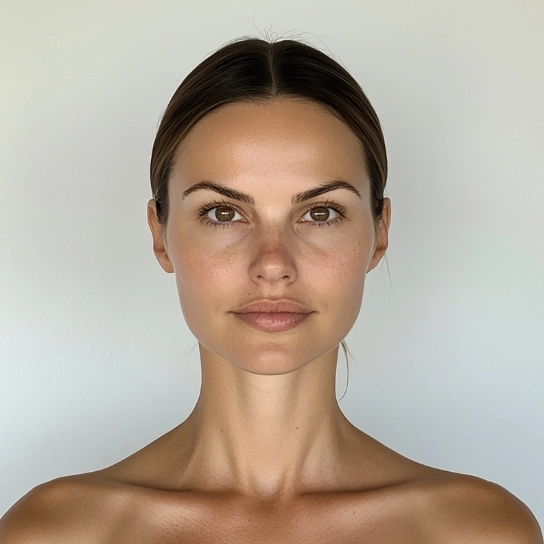
What Is Buccal Fat Removal?
The buccal, or Bichat, fat pad is a distinct pocket of deep facial fat that contributes to fullness in the mid and lower cheek. During bichectomy, a selected part of this pad is removed through a small incision inside the mouth. There is no external skin incision, although the intraoral wound still needs time to heal.
You may also see the procedure described as cheek fat removal, cheek reduction or “Hollywood cheek” surgery. I use it to improve facial balance when the buccal fat pad is genuinely prominent, not to force every face into the same fashionable shape. Bone structure, cheekbone projection, skin quality and the other facial fat compartments all influence the result.
Are Full Cheeks Caused by Buccal Fat, the Masseter Muscle or Weight?
Not every round or wide face is caused by the buccal fat pad. A broad lower face may come from a prominent masseter muscle. More general facial fullness may be related to weight and superficial fat, while fullness beneath the chin belongs to a different anatomical area.
Prominent buccal fat
Fullness is concentrated in the mid-to-lower cheek. Conservative buccal fat removal may be considered in the right patient.
Prominent masseter muscles
Width is strongest around the jaw angles. In this situation, masseter Botox may be more appropriate than removing cheek fat.
Weight and superficial fat
Fullness affects a wider area of the face. Weight stability and identifying the correct fat compartment come first.
If loose skin is the main concern, buccal fat removal is not a substitute for a facelift. Laxity beneath the chin and along the neck requires a separate neck lift assessment.
Who Is a Good Candidate for Buccal Fat Removal?
A suitable candidate usually has a clearly prominent buccal fat pad despite a stable weight, adequate skin quality and expectations that match their anatomy. Age alone does not decide candidacy. The operation can be performed in women and men, but facial structure and the desired contour differ, so the same amount should not be removed from every patient.
It may be suitable when
- Deep cheek fullness persists despite weight stability
- Bone structure and skin quality can support a modest volume reduction
- The patient understands that bichectomy does not reshape the jawbone
I do not recommend it when
- The face is already thin, hollow or losing volume
- Skin laxity rather than deep cheek fat is the main issue
- Further age-related volume loss is likely to exaggerate hollowness
- The goal is an extreme, deeply hollowed look driven by a passing trend
How Is Buccal Fat Removal Performed?
I make a small incision inside the cheek and carefully release the buccal fat pad. I remove the portion that presents through the incision rather than pulling out the entire pad. The two sides are assessed for a balanced reduction that respects the patient’s natural facial proportions. The incision is closed with dissolvable sutures.
How much fat is removed?
I do not work to a fixed weight or volume. The amount that releases through the incision, the patient’s starting facial volume and natural differences between the two cheeks are considered together. The goal is clinical balance, not blindly removing the same number of grams from both sides.
Local or general anaesthesia?
When bichectomy is performed alone, it can be carried out under local anaesthesia and the patient can go home the same day. Because I often combine it with another operation, I more commonly use general anaesthesia in my practice; in that setting, the patient usually stays in hospital overnight.
Why Is Careful Planning Important?
The appearance of the cheek depends on more than one fat pad. Cheekbone projection, jaw width, masseter volume, superficial fat, skin quality and natural facial asymmetry all need to be assessed. What looks like excess cheek fat in a photograph may have a different cause on examination.
For me, the correct decision is sometimes not to operate. The buccal fat pad contributes to youthful facial volume. Reducing it in a naturally thin face simply to follow a trend can make later volume loss more visible.
Buccal Fat Removal Before and After: When Does the Result Appear?
The cheeks can initially look fuller because of postoperative swelling. As this settles, the transition between the cheekbones and lower face becomes clearer. The final pace depends on swelling, the amount removed, skin quality and any combined procedures, so the early appearance should not be treated as the final result.
Bichectomy does not change the jawbone. It may make the cheekbone-to-lower-face transition more visible in some patients, while the change may be subtle in others. A V-shaped face or an extremely sharp jawline cannot be promised.
Buccal Fat Removal Recovery: Swelling, Diet and Oral Care
After a standalone procedure under local anaesthesia, patients can usually return quickly to desk work and ordinary daily activities. I do not impose a prolonged restriction on showering or driving after a straightforward local procedure. When general anaesthesia or another operation is involved, discharge and activity follow the protocol of the main procedure.
What can you eat during the first week?
I recommend liquids for the first three days and soft, puréed foods from day three. If healing looks satisfactory at the one-week review, normal food can be reintroduced. Very hot, hard or sharp foods that may irritate the incision are unsuitable during early healing.
Oral care and stitches
The stitches dissolve and do not need to be removed. Follow the individual oral hygiene instructions and avoid probing the wound with the tongue or fingers. Smoking and nicotine can interfere with healing inside the mouth.
When should you contact the surgical team?
Seek early advice for rapidly increasing or one-sided swelling, severe pain, significant bleeding inside the mouth, foul-tasting discharge, fever, new weakness of facial movement or a cheek that enlarges suddenly.
What Are the Risks and Possible Side Effects of Bichectomy?
Possible complications include bleeding, haematoma, infection, prolonged swelling, pain, temporary difficulty opening the mouth, wound problems, asymmetry, under-correction, excessive volume loss and revision surgery. The buccal fat pad lies close to branches of the facial nerve and the parotid gland’s Stensen duct. Injury is uncommon but is a significant surgical risk.
The most important long-term aesthetic concern is a hollow cheek caused by unsuitable patient selection or excessive removal. I do not agree with the idea that removing more fat automatically produces a better result. Conservative reduction cannot eliminate every risk, but it avoids unnecessary loss of facial volume.
Is Buccal Fat Removal Permanent?
The removed portion of the fat pad does not grow back in the same anatomical form. However, the remaining facial fat can respond to weight change, and the skin, supporting tissues and other fat compartments continue to age. The face therefore does not remain unchanged for life.
Weight gain may add fullness elsewhere in the face and partly mask the result, but it does not recreate the removed fat pad. Weight loss and natural ageing can make hollowness more noticeable in someone whose face was already lean.
Can Buccal Fat Removal Make the Face Look Older or Hollow?
A conservative reduction in a well-selected patient may create a balanced contour. In a face that is already thin, or when too much fat is removed, the cheek hollow can deepen and the face may look older. This depends not only on the operation but also on the natural loss of facial volume over the years.
This is why I do not remove buccal fat in patients who already have a hollow face. If volume loss becomes a concern later, facial fat grafting may be considered in selected patients, but it cannot recreate the original buccal fat pad or guarantee reversal.
Buccal Fat Removal Regret: Can the Procedure Be Reversed?
The excised tissue cannot simply be put back into its original anatomy. If a patient later feels too hollow, carefully planned fat grafting or other volume-restoring treatments may help selected areas, but these are new procedures with their own limits and risks. They do not literally undo the original operation.
The best way to reduce regret is conservative surgery and honest patient selection. If the face is already narrow, if the desired result is extreme, or if a non-fat cause is responsible for facial width, I advise against bichectomy.
Buccal Fat Removal or a Non-Surgical Alternative?
| Cause of fullness | Possible approach | Limitation |
|---|---|---|
| Buccal fat pad | Conservative bichectomy | It is surgery and is not easily reversed |
| Large masseter muscles | Masseter Botox in suitable patients | It does not reduce cheek fat and its effect is temporary |
| General excess weight | Weight stability and lifestyle measures | Buccal fullness can remain despite weight loss |
| Loose skin | Treatment directed at skin quality and laxity | Removing fat does not tighten loose skin |
“Non-surgical bichectomy” is not the same operation. Energy-based treatments or injections do not reproduce the surgical reduction of the deep buccal fat pad through an intraoral incision.
How Much Does Buccal Fat Removal Cost in Istanbul?
The cost depends on whether bichectomy is performed alone under local anaesthesia or combined with another facial or body operation under general anaesthesia, as well as the hospital setting and the scope of the surgical plan. Before discussing price alone, the examination needs to establish whether the fullness is actually caused by the buccal fat pad.
It would not be appropriate to recommend surgery simply because a patient requests it when the face is thin or skin laxity is the real concern. The consultation first establishes candidacy and then, where appropriate, defines the individual treatment plan and cost.
Frequently Asked Questions About Buccal Fat Removal
What is buccal fat removal?
It is the controlled reduction of a selected part of the deep buccal fat pad through a small incision inside the mouth.
Is the entire buccal fat pad removed?
No. In my practice, I remove only the amount that presents after careful release, while maintaining clinical balance between the two sides.
Will bichectomy always create a V-shaped face?
No. The result depends on bone structure, skin quality and fat distribution. The operation does not reshape the jawbone.
Can buccal fat removal make my face look hollow?
Yes, particularly after excessive removal or in a naturally thin face. This is why I do not recommend the operation for patients who already look hollow.
Can buccal fat removal be performed under local anaesthesia?
Yes. A standalone procedure can be performed under local anaesthesia with same-day discharge. When combined with other surgery, I usually use general anaesthesia and keep the patient overnight.
When can I eat after buccal fat removal?
I recommend liquids for three days, then soft puréed food. Normal food can usually resume after the one-week review if healing is satisfactory.
How long does swelling last?
A substantial part settles during the early weeks, but the pace varies with the patient and any combined operation. The first few days do not show the final result.
When can I return to work and driving?
Return is usually quick after a standalone local procedure. If general anaesthesia or another operation is involved, the instructions for the main procedure apply.
Can men have buccal fat removal?
Yes. Jaw width, masseter prominence and the desired masculine proportions still need separate assessment.
What is the right age for bichectomy?
I do not use a fixed age range. Facial development, volume, skin quality and the risk of future hollowing matter more than age alone.
Does weight gain change the result?
The removed tissue does not return in the same form, but other facial fat compartments can change with weight and alter the overall appearance.
Can buccal fat removal be reversed?
The original anatomy cannot be restored by simply replacing the removed pad. Fat grafting or fillers may sometimes improve volume loss, but they do not literally reverse the operation.
Can the salivary duct or facial nerve be injured?
The buccal fat pad lies close to both structures. Injury is uncommon but possible, which is why detailed anatomical knowledge and conservative technique matter.