
Botox (Botulinum Toxin) Injections
Botulinum toxin injections, commonly searched for as Botox, temporarily soften dynamic lines created by facial movement. My cosmetic practice focuses on the upper face: forehead lines, frown lines, crow’s feet and bunny lines beside the nose.
I do not aim to freeze every expression. I assess muscle strength, eyebrow position and each patient’s natural facial character before deciding where and how much to inject.
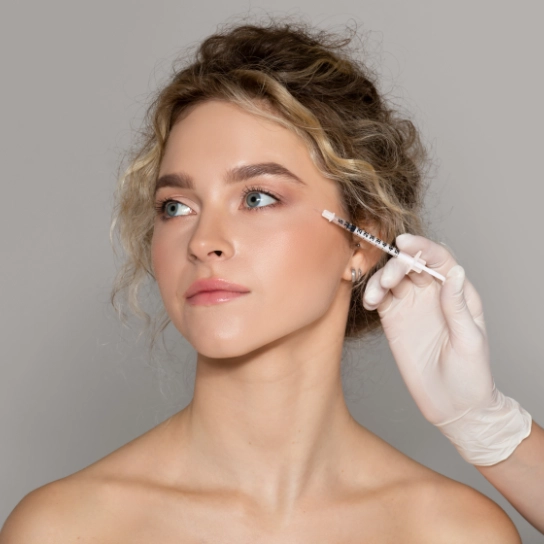
What Is Botox and How Does It Work?
Botulinum toxin temporarily reduces communication between a nerve and the injected muscle. As the muscle’s pull becomes weaker, lines caused by repeated movement soften. The effect is temporary and muscle activity gradually returns.
Botox is a brand name, although patients often use it as a general term for botulinum toxin injections. Products are not automatically interchangeable: their licensing, dose units and handling differ. Product and dose therefore need to be selected for the individual patient.
Dynamic and static lines are different
Botulinum toxin primarily treats lines that appear with expression. If a crease remains visible at rest, reducing muscle movement alone may not remove it. Skin quality and volume loss may need separate assessment.
Which Facial Areas Can Botox Treat?
Forehead lines
The forehead muscle also supports eyebrow position. Dose and injection height must account for eyebrow heaviness and eyelid anatomy.
Frown lines
The glabellar complex and corrugator muscles create vertical lines between the brows. Their strength and asymmetry shape the plan.
Crow’s feet
These lines appear at the outer corners of the eyes when smiling. The thin tissues around the eye require careful point selection.
Bunny lines
Short expression lines beside the nose can be included when they form part of the patient’s upper-face movement pattern.
How I Plan Natural-Looking Botox Results
I avoid heavy dosing across the forehead. Around the corrugator muscles, I often use lower doses so that a small amount of frowning movement remains. This helps preserve the patient’s natural expressive character.
For crow’s feet, I may aim for a more noticeable softening when the anatomy allows it. Even here, I do not promise that every established line will disappear completely. Muscle strength, eye shape and the depth of a resting crease all matter.
Who May Be Suitable for Botox?
I do not decide on treatment from age alone. The relationship between movement and the line, muscle strength, eyebrow and eyelid position, facial asymmetry, previous treatments, expectations and general health all need to be considered.
Potential candidates
Adults who want temporary softening of movement-related upper-face lines while retaining a degree of natural expression.
When extra assessment is needed
Existing brow or eyelid droop, marked asymmetry, a neuromuscular condition, infection at an injection site or significant medication use may change the plan.
What to disclose
Pregnancy or breastfeeding, allergies, medicines, blood thinners and your response to previous toxin treatments should be discussed. Do not stop prescribed medicine without medical advice.
What Happens During a Botox Appointment?
Facial movement assessment
I examine the face at rest and while frowning, raising the brows and smiling. The injection map is based on the movement I see.
Topical anaesthetic and injection
I use topical anaesthesia in my practice. Small injections are placed into selected muscles using an individual dose plan.
Review on day 10
I review the result on the tenth day. If an area remains uneven or under-treated, I decide at that visit whether a small touch-up is appropriate.
When Does Botox Start Working and How Long Does It Last?
Many patients begin to notice a change within the first few days. I usually assess the result more reliably around days 10–14. A common duration is approximately four to six months, but product, dose, treatment area, muscle strength, metabolism and previous treatments all influence this.
There is no permanent Botox. When the effect wears off, the face does not suddenly become worse; muscle movement and the natural course of the lines gradually return. Repeat treatment is planned around the return of movement and the patient’s preference rather than a rigid calendar.
Botox Aftercare: What Should You Avoid?
During the first 24 hours
Do not rub or massage the treated areas. Avoid strenuous exercise, very hot showers, saunas and treatments that apply firm pressure to the face. Gentle daily activity is fine.
From the next day
My protocol allows showering and normal exercise from the next day. Avoid prolonged hot water, pressure and rubbing. Makeup may be applied gently without massaging the injection points.
Firm rubbing around the eyes may increase the chance of unwanted spread to a nearby muscle. Brief bending and ordinary movement are usually not the main concern; prolonged pressure over a treated area during the first hours is best avoided.
Side Effects, Risks and When to Seek Medical Advice
Temporary redness, tenderness, swelling or bruising at an injection site can occur. Some patients experience headache or temporary asymmetry. Around the eyes, temporary change in brow or eyelid position, dryness or swelling is possible.
The aftercare point I emphasise most is not to massage or rub the treated area. Unwanted spread to an adjacent muscle can contribute to temporary eyelid droop. It is usually reversible as the toxin effect fades, but it should still be assessed.
Urgent warning signs
Seek urgent medical help for difficulty swallowing, speaking or breathing, widespread muscle weakness, a severe allergic reaction or another rapidly worsening unexpected symptom.
Botox vs Dermal Fillers
Botulinum toxin
Targets muscle activity responsible for dynamic lines. It does not add volume or fill a hollow area.
Dermal fillers
Address selected volume loss or contour deficits. They may be used around the lips, cheeks, temples or chin for different purposes. In some patients, toxin and filler solve separate problems within one broader plan.
What Affects the Cost of Botox?
Cost is not determined by the number of named areas alone. The product, dose, muscle strength, number of treatment sites, previous response and whether a small day-10 touch-up is required can all affect the plan. A “three-area package” should not imply the same dose for every face.
Searches for “permanent Botox” reflect a misunderstanding: the effect is temporary. A meaningful quotation requires an individual assessment.
Other Uses of Botulinum Toxin
Teeth grinding and masseter treatment
Bruxism and lower-face masseter treatment require a different anatomical and dose plan. Read the teeth grinding Botox guide.
Excessive sweating
Axillary or palmar hyperhidrosis has a different purpose and injection pattern. See the sweating Botox guide.
Migraine
Botulinum toxin can be used in migraine care, but the indications, injection map and dose differ from cosmetic upper-face treatment. The two protocols should not be confused.
Frequently Asked Questions
Is Botox safe?
It is widely used when the product, patient, dose and anatomy are appropriately assessed, but it is not risk free. Side effects and personal medical factors should be discussed first.
Will Botox remove all facial expression?
Not necessarily. Dose planning can preserve movement. I particularly aim to retain some natural motion across the forehead and frown-line area.
How long does Botox take to work?
Changes may begin within a few days. I review patients on day 10, while the full change may continue to develop over 10–14 days.
How long does Botox last?
Approximately four to six months is common, although product, dose, area, muscle strength and metabolism create considerable variation.
What age should you start Botox?
There is no single ideal age. In an adult, the actual dynamic line, anatomy, expectations and medical suitability are more useful than a birthday.
When can I shower after Botox?
My protocol allows showering the next day. Avoid high heat, rubbing and firm pressure over the treated area.
When can I exercise after Botox?
I advise avoiding strenuous exercise for the first 24 hours. Normal exercise can usually resume the next day.
Can I bend over or sleep on my side after Botox?
Brief ordinary movement is usually not the main concern. During the first hours, avoid prolonged direct pressure and do not rub the treated areas.
Can I drink coffee after Botox?
Coffee is not generally considered to cancel the effect. Advice may differ if caffeine worsens palpitations, blood pressure or an individual tendency to bruise.
Why can eyelid droop happen after Botox?
It can relate to unwanted effect on a nearby muscle or to pre-existing anatomy. Rubbing the area may increase unwanted spread. Droop is usually temporary but should be reviewed.
Will my face look worse when Botox wears off?
No sudden deterioration is expected. Muscle movement returns gradually and the natural progression of the lines continues.
Is there permanent Botox?
No. Botulinum toxin has a temporary effect, with duration varying between patients.
Should I choose Botox or filler?
Botox is considered for movement-related lines; filler is considered for selected volume loss. They are not interchangeable.
What is baby Botox?
It is not a separate product. The term usually describes lower or more distributed dosing intended to preserve more movement. It does not mean the same dose for every patient.