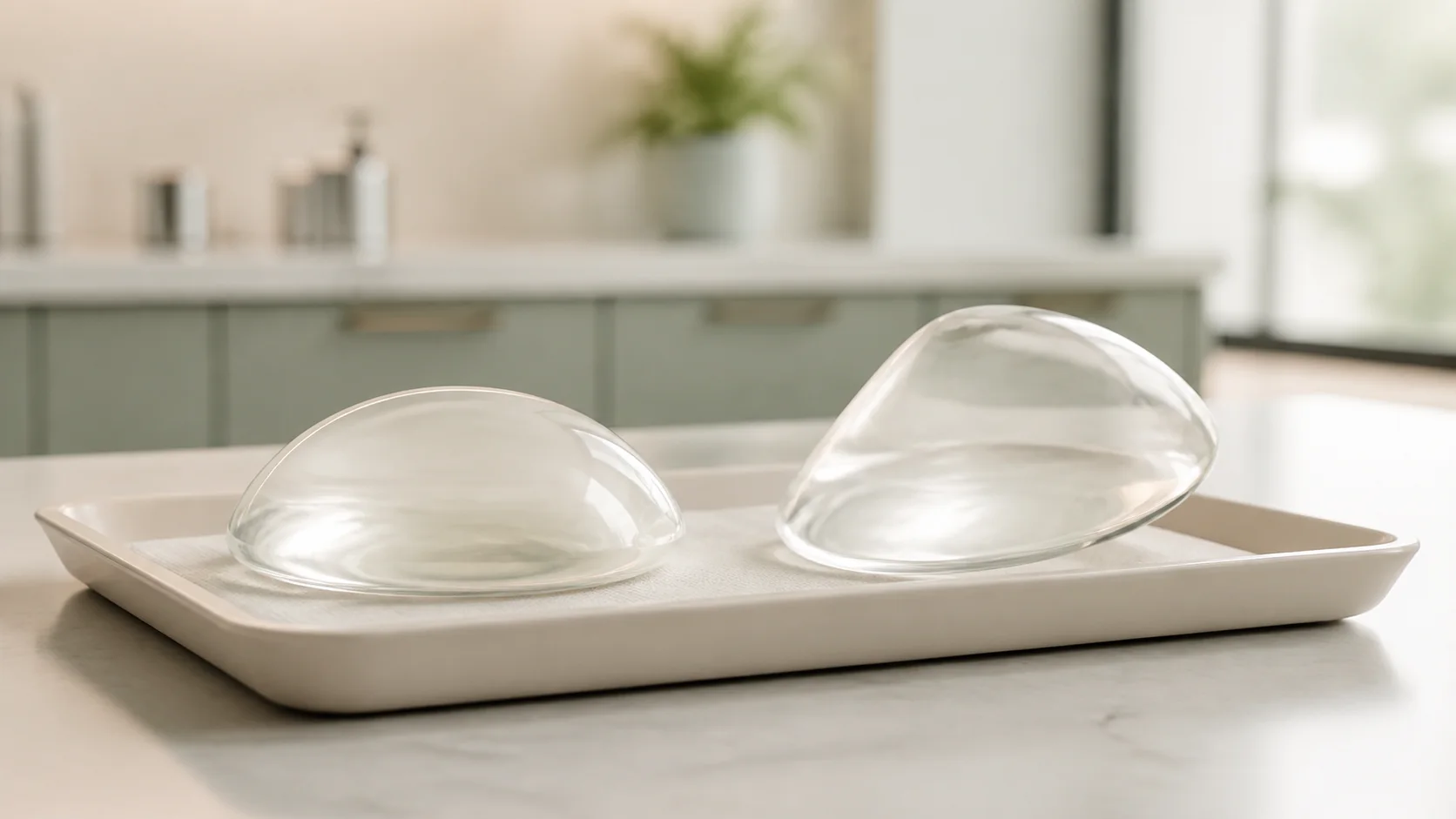
Personalised balance in breast aesthetics
Breast Asymmetry Correction Surgery
The aim is not to perform the same procedure on both breasts, but to assess each breast individually and create a natural, balanced appearance.

In breast asymmetry, the aim is not to perform the same procedure on both breasts, but to assess each breast individually and create a natural, balanced appearance.
Small differences in volume, shape or nipple level between the right and left breasts are often normal. When the difference affects daily life, clothing choices or self-confidence, a personalised surgical assessment may be considered.
Who Is a Good Candidate for Breast Asymmetry Surgery?
Many women who notice that their breasts look different from one another wonder whether this is normal.
In fact, very few women have completely symmetrical breasts. Small differences in volume, shape or nipple level between the right and left breasts are usually entirely normal and do not require treatment.
In some women, however, the difference may be pronounced enough to affect daily life. Difficulty choosing a bra, clothes fitting differently on one side, or a clearly visible difference between the breasts can affect self-confidence over time.
In my practice, many patients seeking treatment for breast asymmetry have lived with it for years, assuming it was simply “bad luck”. With appropriate surgical planning, most breast asymmetries can be corrected successfully. The key point is that every patient’s asymmetry is different and treatment must be planned individually.
Why Can Breast Asymmetry Go Unrecognised?
In my own practice, a significant number of patients who come to me with breast asymmetry have lived for years thinking that it is something they simply have to live with. However, nowadays, with proper surgical planning, most breast asymmetry can be successfully corrected.
The most important point here is that each patient’s asymmetry is different.
Therefore, treatment should be planned entirely on an individual basis.
In this article, I will explain in detail why breast asymmetry occurs, in what situations it is considered normal, and how I correct it surgically.
What Is Breast Asymmetry, and How Much Is Normal?
Breast asymmetry is a difference between the right and left breasts in terms of volume, shape, nipple position, or degree of sagging.
In fact, complete symmetry is quite rare in the human body.
Just as with our faces, it is completely natural to have small differences in our breasts.
Therefore, not every breast asymmetry is considered a disease.
However, when the difference becomes significant, it can affect both the aesthetic appearance and the person’s quality of life.
What matters to me is not the differences measured in millimeters, but how uncomfortable the patient is with the image she sees when she looks in the mirror.
When Is a Difference Between the Breasts Considered Normal?
I get asked this question quite often.
The answer is actually quite simple.
Mild asymmetry is normal.
In fact, the number of women with completely symmetrical breasts is much smaller than we think.[A21]] In some women;
In some women;
- one breast may be a few millimeters lower,
- one may be slightly fuller than the other,
- the level of the nipples may be slightly different.
Most of these are normal anatomical differences.
What makes surgical treatment necessary is when this difference;
- It becomes noticeable under clothing,
- making bra selection difficult,
- negatively affecting a person’s aesthetic expectations,
such situations arise.
Important: If breast asymmetry is new or increasing rapidly, or is accompanied by a lump, nipple discharge, skin retraction or significant pain, breast-health assessment should come before aesthetic planning.
What Causes Breast Asymmetry?
There is no single cause of breast asymmetry.
The most common causes I encounter in my own practice are as follows:
| Why | Explanation |
|---|---|
| Congenital developmental difference | This is one of the most common causes. |
| Tuberous breast | One breast may develop differently from the other. |
| Pubertal developmental differences | Breasts may develop at different rates. |
| Pregnancy and breastfeeding | Volume and sagging may develop differently. |
| Weight changes | Breast volumes may be affected differently. |
| Previous surgeries | Secondary asymmetry may develop. |
| Trauma | Although rare, it can affect breast development. |
How Can Tuberous Breast Cause Asymmetry?
Breast asymmetry is quite common in patients with tuberous breast deformity.
This is because both breasts are not affected to the same degree.
In some patients, only one breast develops tubercular deformity while the other breast is close to normal.
In others, both breasts are affected, but the degree of deformity differs.
Therefore, in tuberous breast surgeries, asymmetry is often corrected in the same operation.
Causes of Breast Asymmetry: Summary
| Why | Approach |
|---|---|
| Congenital developmental difference | Personalized surgical plan |
| Tuberous breast | Shaping ± implant |
| Pregnancy and breastfeeding | Planning according to volume and sagging |
| Weight changes | Volume Analysis |
| Previous Surgeries | Revision surgery |
Does Every Breast Asymmetry Require Surgery?
No.
I never recommend surgery to any patient solely because of millimeter-sized differences.
When making a surgical decision;
- The patient’s level of discomfort,
- appearance under clothing,
- breast volume,
- breast shape,
- degree of sagging,
- patient’s expectations,
should be evaluated together.
Because our goal is not to create perfect symmetry measured with a ruler.
Our aim is to create a balance that looks natural and makes the patient feel comfortable.
How Is Mild Asymmetry Distinguished from Asymmetry Requiring Surgery?
| Condition | Surgical Evaluation |
|---|---|
| Minor differences not noticeable in daily life | Usually not necessary |
| Significant difficulty in bra selection | Can be evaluated |
| Significant difference under clothing | Surgery may be considered |
| With tuberous breast | Surgery is often planned |
| Significant difference at nipple level | Evaluated on a case-by-case basis |
How Is Breast Asymmetry Corrected?
The most important point in the treatment of breast asymmetry is not to perform the same surgery on both breasts.
The main goal is to ensure that the two breasts resemble each other as much as possible at the end of the surgery.
Therefore, there is no standard surgery in breast asymmetry surgery.
Each patient;
- breast volume,
- breast base,
- nipple level,
- degree of sagging,
- skin structure,
- existing breast tissue,
are evaluated separately and the surgical plan is prepared accordingly. When planning surgery, volume, breast boundaries, nipple position and parenchyma should be analyzed separately. Source: Türkiye Klinikleri
How Is Unilateral Breast Asymmetry Surgery Planned?
| Type of Asymmetry | Frequently Preferred Approach |
|---|---|
| Mild volume difference | Different implant volumes or personalized implant planning if necessary |
| Significant volume difference | Augmenting the smaller side, reducing the larger side, or using different surgical plans for both breasts |
| Sagging difference | Unilateral or bilateral breast lift |
| Tuberous breast | Breast base reshaping ± implant |
| Post-revision asymmetry | Personalized revision surgery |
Can Different Implants Be Used in Each Breast?
This is one of the most frequently asked questions by my patients.
The answer is:
Not always.
If the reason for asymmetry is only a difference in volume, using implants of two different volumes may provide a more natural and balanced result in some patients.
However, not every volume difference requires different implants.
Sometimes the implant volumes are the same;
- Implant pocket,
- Lower pole shaping,
- Breast tissue reshaping,
Can be planned differently on both sides.
Therefore, focusing only on implant volume is not correct.
What is important for me is that the two breasts look as balanced as possible at the end of the surgery.
When Is a Unilateral Breast Lift Needed?
Breast asymmetry is not only caused by a difference in volume.
In some women, one breast may sag more than the other.
In this case, using implants alone may not be sufficient.
In my own practice, in these patients sometimes;
- I perform breast lift on only one breast,
- sometimes breast lift on both breasts using different techniques,
- and sometimes breast lift with implants.
I perform this procedure.
The goal is not to perform the same procedure on both breasts, but to achieve as symmetrical an appearance as possible at the end of the surgery.
👉 You can also check my “Breast Lift (Mastopexy)” page for detailed information about breast lift.
Can Fat Grafting Correct Breast Asymmetry?
Fat injection may be a suitable option in some mild asymmetries.
Especially in cases where the volume difference is limited and the patient does not want a large implant, small volume differences can be corrected using the person’s own fat tissue.
However, in patients with significant volume differences, tuberous breast deformity, or severe shape distortion, fat grafting alone is often insufficient.
Therefore, the appropriate method should be decided after examination.
Is Perfect Symmetry Possible?
I always give the same answer to this question.
No.
In fact, no person’s face, hands, or breasts are completely symmetrical.
The goal of surgery is not to create millimeter-perfect symmetry.
My goal is;
for the patient to have balanced and aesthetically pleasing breasts that look natural enough to be undetectable in daily life.
Therefore, before the surgery, I discuss the expectations of my patients in detail and we plan together the most natural result we can achieve.
My Surgical Approach to Breast Asymmetry
In the treatment of breast asymmetry, I never apply a single method to all patients.
Because the cause of each asymmetry is different.
In some patients, the main problem is a difference in volume, while in others it is the breast base, in others the nipple level, and in others tuberous breast deformity.
Therefore, my approach is not to perform the same surgery on both breasts; it is to evaluate each breast separately and achieve a natural result that is as similar as possible at the end of the surgery.
Sometimes I use different implants for this.
Sometimes I only perform a lift on one breast.
Sometimes I can reduce the need for implants by reshaping the breast tissue.
In my opinion, the success of the surgery depends more on the correct planning than on the implant used.

There is no standard procedure for breast asymmetry surgery. Different implant volumes, unilateral or bilateral lifting, reshaping of breast tissue and, in suitable patients, fat transfer can all be used in different combinations to achieve the same goal.
Treatment Options According to the Components of Asymmetry
| Cause of Asymmetry | Treatment Approach |
|---|---|
| Volume difference | Different implant volumes or personalized planning if necessary |
| Breast ptosis | Breast lift (unilateral or bilateral) |
| Tuberous breast | Breast base reshaping ± implant |
| Nipple level difference | Nipple position correction if necessary |
| Previous surgeries | Revision surgery |
Recovery and Scarring After Breast Asymmetry Surgery
The recovery process after surgeries to correct breast asymmetry may vary depending on the procedures performed.
For example, the recovery process is not exactly the same for a patient who only received implants and a patient who underwent both breast lift and implant placement.
In general, during the first few days;
- tightness in the breasts,
- mild pain,
- edema,
- tenderness when moving,
are normal.
I recommend that my patients use a supportive, wire-free bra for the first 6 weeks, avoid strenuous sports activities, and protect their breasts from unnecessary trauma.
👉 For detailed information on bra selection during the recovery period, you can review my article “Bra Use After Breast Augmentation”.
The shape of the breasts may constantly change during the first few months.
As the swelling decreases, the tissues soften, and the implants settle into their natural position, the balance between the two breasts is gradually better assessed.
Therefore, patience is needed to evaluate the final result.
Are Breast Asymmetry Correction Results Permanent?
I always give the same answer to this question.
No.
Because there are almost no two perfectly symmetrical breasts in nature.
Moreover, the healing process after surgery does not progress exactly the same in both breasts.
My goal is not to create millimeter-perfect symmetry.
My aim is;
- to be undetectable under clothing,
- The goal is to create a balance that will not bother the patient in daily life,
- and will look natural,
I believe that successful breast asymmetry surgery is exactly that.
Can Breast Asymmetry Recur?
Can Breast Asymmetry Recur?
However, throughout life;
pregnancy,
- breastfeeding,
- weight changes,
- aging,
- gravity,
- can affect both breasts in different ways.
Therefore, slight differences may reappear over the years.
This does not mean that the surgery was unsuccessful; It is part of the natural aging process of the breast.
This does not mean the surgery was unsuccessful; it is part of the natural aging process of the breast.
Can Revision Be Required After Breast Asymmetry Surgery?
In breast asymmetry surgeries, the vast majority of patients achieve the desired result with a single operation.
However, it is not correct to say that no surgery in aesthetic surgery requires lifelong revision.
The need for revision may arise years later due to reasons such as:
- desire for implant change,
- post-pregnancy changes,
- significant weight changes,
- capsule contracture,
- implant-related problems,
etc.
In such cases, the treatment to be applied is planned entirely according to the existing problem.
👉 You can also review my “Breast Revision” page for detailed information about revision surgeries.
Breast Asymmetry Correction Results
Breast asymmetry is much more common in women than we think.
In fact, having perfectly symmetrical breasts is quite rare in nature.
Therefore, not every difference requires treatment.
However, if a significant difference in volume, shape deformity, or differences in nipple level affect a person’s daily life and self-confidence, very successful results can be achieved with modern surgical techniques applied today.
In my own practice, when evaluating breast asymmetry, I aim not to perform the same surgery on both breasts, but to create natural and balanced breasts that are as similar as possible to each other at the end of the surgery.
Because, in my opinion, a successful breast asymmetry surgery is not about perfect symmetry measured with a ruler; it is about the patient feeling that their breasts look natural when they look in the mirror.
Breast Asymmetry Frequently Asked Questions
Can surgery be performed on only one breast?
Yes. If only one breast requires correction, balance can be achieved with unilateral surgery.
Does using different implants cause a problem?
No. Symmetry can be improved by using implants with different volumes and projections in the two breasts.
Can a breast lift be performed at the same time?
Yes. It is quite common to lift a sagging breast during the same operation.
Is breast asymmetry normal?
Yes. Small differences in volume, shape or nipple level between the right and left breasts are often normal anatomical variations. Surgical assessment may be considered when the difference clearly affects daily life or aesthetic appearance.
What causes breast asymmetry?
Common causes include congenital developmental differences, tuberous breast, developmental differences during puberty, pregnancy and breastfeeding, weight changes and previous breast surgery.
Can breast asymmetry increase over time?
Yes. Pregnancy, breastfeeding, weight changes and ageing may affect the two breasts differently, and mild asymmetry may become more noticeable over the years.
Can breast asymmetry correct itself?
Changes may occur during breast development in puberty. However, pronounced breast asymmetry in adulthood is not expected to correct itself.
Does every breast asymmetry require surgery?
No. Small differences are normal and usually do not require treatment. The decision is based on the patient’s level of concern, expectations and degree of asymmetry.
Can breast asymmetry affect only one breast?
Asymmetry describes a difference between the breasts. In some patients, one breast develops differently while the other is normal; this is common in tuberous breast.
Can breast asymmetry be completely corrected?
Surgery can reduce it significantly. However, perfect millimetric symmetry cannot be guaranteed; the goal is a natural result that appears balanced in daily life.
Does breast asymmetry prevent breastfeeding?
Breast asymmetry alone does not prevent breastfeeding. If the underlying cause is a developmental difference such as tuberous breast, milk production may vary between individuals.
Will there be scars after breast asymmetry surgery?
Scars vary according to the technique used. They are more limited when implants alone are used, while different incision patterns may be required when a lift is performed. Scars usually become less noticeable with time.
Can breast asymmetry return?
The same congenital developmental condition is not expected to recur. However, ageing, pregnancy, breastfeeding and weight changes may affect the two breasts differently over the years.
Can fat transfer correct breast asymmetry?
Yes, in some mild volume differences. Fat transfer alone may not be sufficient for a marked shape deformity, tuberous breast or advanced asymmetry.
When can I exercise after breast asymmetry surgery?
The timing depends on the surgery performed. The recovery period recommended by the surgeon should be completed before returning to strenuous upper-body exercise.
When is the best time for breast asymmetry surgery?
It is generally considered after breast development is complete and aesthetic expectations are clear. The best time is determined individually after consultation.
Which doctor should I consult for breast asymmetry?
Pronounced breast asymmetry should be assessed by a plastic, reconstructive and aesthetic surgeon experienced in breast aesthetics.