Breast development differences
Tubular (Tuberous) Breast Correction Surgery
Tuberous breast is not simply a small breast. The breast base, lower pole, areola and balance between the two breasts should be assessed together.

Tuberous breast is not simply a small breast. The breast base, lower pole, areola and balance between the two breasts should be assessed together. The treatment plan is individualized according to each patient’s anatomy.
Many women notice that their breast development differs from that of other women, yet they may not realize that this can be a congenital developmental difference. Tuberous breast is a condition in which the breast base may remain narrow, the lower pole may not develop sufficiently, and the areola may appear wide or prominent. The issue is often not only volume, but also breast shape.
Who Is a Good Candidate for Tuberous Breast Correction?
Many women notice that their breast development differs from that of other women, yet they may not realize that this can be a congenital breast-development difference. Some feel that their breasts are narrower than usual. Others describe a wider-than-expected areola, a tubular breast shape, or a noticeable difference between the two breasts.
In fact, many of these findings may be associated with tuberous breast, also known as tubular breast deformity . In my practice, I encounter tuberous breast deformity more often than many people expect, particularly among young patients seeking breast augmentation. Many patients spend years thinking that it is simply a “small breast” or a “genetic difference.”
Why Can Tuberous Breast Go Unrecognised?
However, tuberous breast is not simply about having small breasts.
This condition is a congenital deformity that occurs during breast development in adolescence and often requires a different surgical plan than standard breast augmentation surgery.
The good news is this:
When the correct surgical technique is used, tuberous breast deformity can be largely corrected, creating natural, symmetrical, and aesthetically pleasing breasts.
In this article, I will explain in detail what tuberous breast is, how it is diagnosed, what symptoms it presents with, and my own surgical approach to its treatment.
What Is a Tubular (Tuberous) Breast?
Tuberous breast is a congenital breast development disorder that occurs during the development of the breast in adolescence.
In normal breast development, breast tissue expands evenly on the chest wall, both upwards, downwards, and sideways.
In tuberous breast, it is thought that the connective tissues surrounding the base of the breast restrict normal development.
As a result, the breast;
- cannot expand sufficiently,
- especially the lower part (lower pole) cannot develop,
- instead of spreading towards the chest wall, it grows more forward.
Therefore, the breast may become narrower, longer, and take on a tube-like appearance.
The names “tubular breast” or “tuberous breast” come from this.
This condition can affect not only the aesthetic appearance but also breast symmetry and, in some patients, psychological self-confidence.
How Can You Recognise a Tuberous Breast?
Not every patient has the same symptoms.
While some women have only a slight lower pole narrowing, some patients have the classic tuberous breast appearance quite pronounced.
The most common findings I encounter are as follows.
| Symptom | Description |
|---|---|
| Narrow breast base | The breast does not spread sufficiently across the chest wall. |
| Lower pole underdevelopment | The lower part of the breast is short and lacks fullness. |
| Wide areola | The dark area around the nipple may be larger than normal. |
| Forward herniation of breast tissue | A bulging appearance may occur around the areola. |
| Breast asymmetry | The two breasts may be affected to varying degrees. |
| Tube-shaped appearance | The breast extends forward instead of widening. |
Not all of these symptoms need to be present.
While some patients may have only one or two findings, in others the deformity is quite pronounced.
Is Every Small Breast Tuberous?
This is particularly important.
Having small breasts alone does not mean having tuberous breasts.
In fact, small breasts and tuberous breasts are completely different conditions.
In small breasts, breast development is completed normally; only the breast volume is less.
In tuberous breasts, the problem is more the shape of the breast than the volume.
Therefore, simply placing breast implants is often not enough.
First, it is necessary to reshape the anatomical structure of the breast.
Differences Between a Tuberous Breast and a Normally Shaped Small Breast
| Normal Small Breast | Tuberous Breast |
|---|---|
| Breast volume is low. | There is a deformity. |
| The breast base is normal. | The breast base is narrow. |
| The lower pole is normally developed. | Lower pole development is insufficient. |
| Areola is normal. [182]] Areola may be wide. [183]] Implant alone may be sufficient. [184]] Shaping is often required. [185]] How is the Treatment Plan Determined? | The areola may be enlarged. |
| An implant alone may be sufficient. | Tissue reshaping is often required. |
What Causes Tuberous Breast and How Severe Can It Be?
The exact cause of tuberous breasts is unknown today.
However, the most widely accepted theory is that during breast development, the connective tissues surrounding the breast base limit normal expansion.
Therefore, breast tissue, especially in the lower pole, cannot develop sufficiently.
It is thought that genetic predisposition also plays a role, as it is more common in some families.
However, so far, no single gene or single cause has been identified.
Therefore, tuberous breast;
- does not occur due to a mistake made by the person,
- does not result from wearing the wrong bra during adolescence,
- is not related to doing or not doing sports.
This is entirely a developmental condition.
Can Tuberous Breast Be Mild or More Pronounced?
When tuberous breast is mentioned in society, patients with severe deformities usually come to mind.
However, in my own practice, the most common group I see are those with mild or moderate deformities.
These patients often only have;
“Doctor, the lower part is not full at all.”
or
“My two breasts are very different from each other.”
They come with these complaints.
Some live for years thinking this is normal.
Therefore, mild tuberous breast deformities are much more common than we think.
How Is Tuberous Breast Corrected?
The most important point in the treatment of tuberous breast is that the same surgery is not applied to every patient.
In fact, one of the most common mistakes made in this deformity is that the problem is only evaluated as small breast volume.
However, the main problem in tuberous breast is often not the volume of the breast, but its shape.
Therefore, simply placing implants is not sufficient in most patients.
First of all, it is necessary to recreate the normal anatomy of the breast.
For this, during surgery;
- widening of the narrow breast base,
- freeing of the underdeveloped lower pole,
- reshaping of the breast tissue,
- areola reduction when necessary,
- adding volume with an implant when needed,
can be planned together in the same surgery.
Therefore, tuberous breast surgery requires more planning than a classic breast augmentation surgery.
How Is a Tuberous Breast Treatment Plan Determined?
| Findings | Possible Treatment |
|---|---|
| Mild deformity | Breast tissue shaping ± implant |
| Volume deficiency | Augmentation with implant |
| Significant asymmetry | Different surgical plans for both breasts |
| Wide areola | Areola reduction if necessary |
| If sagging is present | Breast lift + implant |
Does Every Tuberous Breast Patient Need an Implant?
No.
This depends entirely on the patient’s current breast volume and expectations.
In some patients, breast volume is sufficient and the main problem is only breast shape.
In these patients, only reshaping of the breast tissue may be sufficient.
However, in my own practice, a significant portion of the patients who apply want both to increase breast volume and to correct deformities.
Therefore, in most patients, the use of implants becomes part of the treatment plan.
The aim here is not only to enlarge the breast.
The main goal is;
- to bring the breast base to its normal width,
- to form the lower pole,
- to obtain a more natural breast shape.
How Are the Constricted Breast Base and Lower Pole Corrected?
One of the most prominent problems in tuberous breasts is that the lower part of the breast is not sufficiently developed.
In a normal breast, the lower pole is the most important area that forms the natural roundness of the breast.
In tuberous breasts, however, this area is narrow and restricted.
Therefore, when only an implant is placed, the implant cannot expand downwards, and the breast may continue to appear tube-shaped.
That’s why careful release of the lower pole during surgery and the creation of a new breast shape is one of the most important stages of treatment.
My approach is to first correct the anatomical shape of the breast, and then, if necessary, to complete the volume with an implant.
How Is a Wide or Herniated Areola Corrected?
In tuberous breast patients, it is quite common for the dark area around the nipple (areola) to be larger than normal.
This is often due to the breast tissue not expanding sufficiently, and the developing breast tissue bulging forward from around the areola.
In some patients, the areola begins to look more natural with only the correction of the breast shape.
In some, areola reduction can also be performed in the same surgery to achieve aesthetic balance.
This decision is evaluated individually for each patient.
How Are Unilateral Tuberous Breast and Asymmetry Corrected?
Yes.
In fact, we do this quite frequently in tuberous breast deformity.
Because in many patients, the two breasts are not affected to the same degree.
One breast may be milder, while the other may be more prominently tuberous.
Therefore, the surgical plan is made separately for each breast.
In some patients;
- different implant volumes,
- different tissue shaping,
- different lower pole arrangements
may need to be applied.
The aim here is not to perform the same surgery on both breasts, but to ensure that the two breasts resemble each other as much as possible at the end of the surgery.
For more detailed information about breast asymmetry, you can also review my article titled “Breast Asymmetry”. (We will add an internal link here later.)
Can Tuberous Breast Affect Breastfeeding?
No.Tuberous breasts do not always prevent breastfeeding.
Breastfeeding capacity is more related to the development of the mammary glands than to the external appearance of the breast. Many women with tuberous breasts can successfully breastfeed their babies after birth.
However, since tuberous breasts are a breast development disorder, some patients may have less mammary gland development than normal. In this case, milk production may vary from person to person. However, the mere appearance of a tuberous breast does not mean that breastfeeding is impossible.
Another question is whether the surgery will affect breastfeeding. When planning tuberous breast surgeries, I prefer techniques that preserve the milk ducts and breast tissue as much as possible. However, as with any breast surgery, it is not possible to completely guarantee breastfeeding capacity.
I always tell my patients about this:
The presence of a tuberous breast alone does not mean you cannot breastfeed. Similarly, having surgery does not necessarily mean you will have breastfeeding problems. This process can vary from person to person, and the most accurate assessment can be made after examining your current breast structure.
My Surgical Approach to Tuberous Breast Correction
In tuberous breast treatment, I never focus solely on implant size.
Because in these patients, the problem is often not the lack of implants, but the anatomical development of the breast.
My approach is to first reshape the breast base and lower pole, create the natural form of the breast, and then, if necessary, complete the volume with an implant.
Since each patient’s deformity is different, the surgical plan I apply is also prepared individually.
While some patients only need to reshape the breast tissue, some patients may require implants, and some may require breast lift in addition to implants.
My goal is not only to create a larger breast, but also to achieve a breast shape that is harmonious with the patient’s body, looks natural, and can maintain its aesthetic appearance for many years.
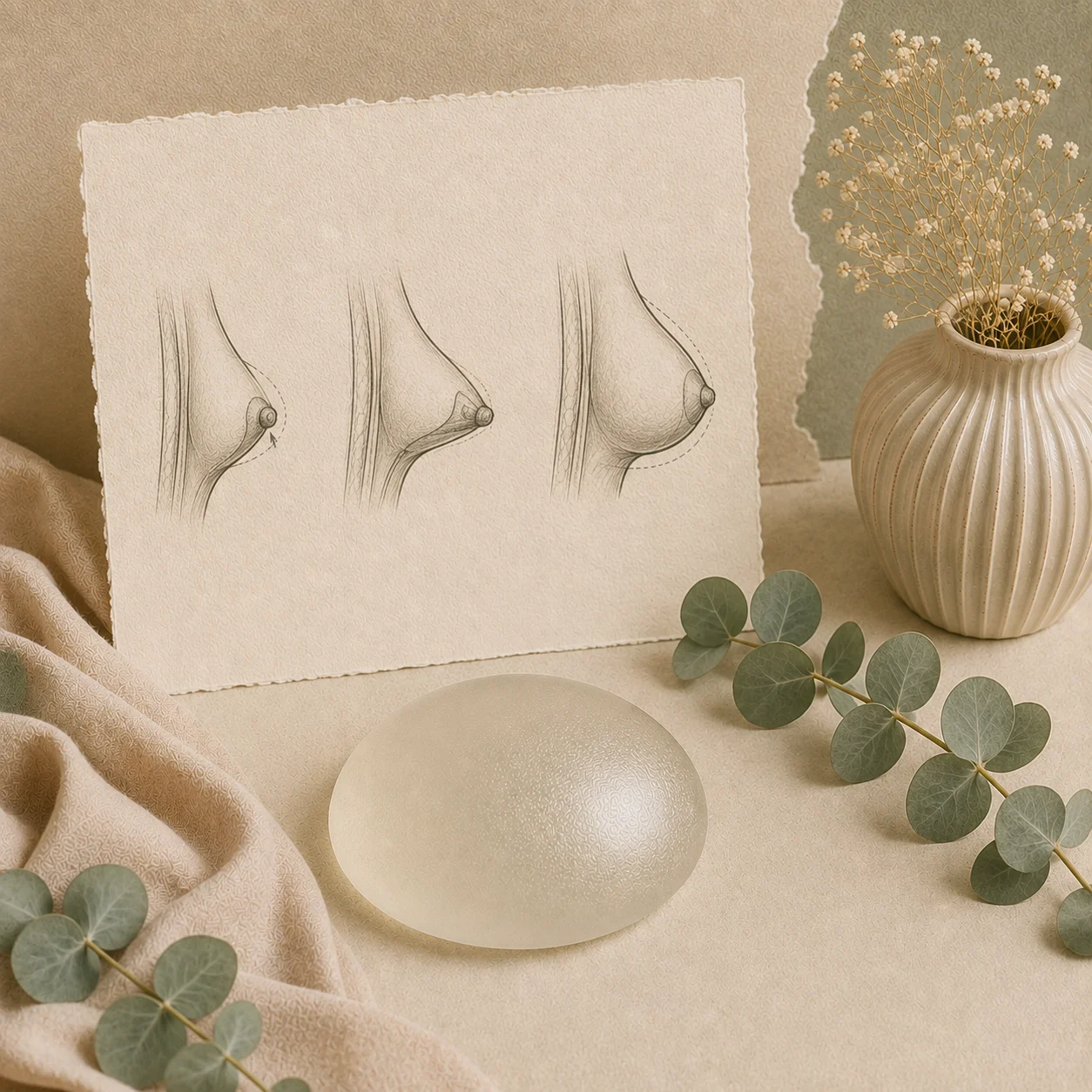
In tuberous breast, the two breasts may not be affected equally. Some patients therefore need different implant volumes, different tissue reshaping or different lower-pole adjustments. The aim is not to perform the same procedure on both sides, but to achieve the best possible balance between the breasts.
Recovery After Tuberous Breast Correction Surgery
The recovery process after tuberous breast surgery varies depending on the surgical technique used, but generally progresses similarly to breast augmentation surgery.
It is normal to experience a feeling of tightness, mild pain, and swelling in the breasts during the first few days. Regular use of prescribed medications and adherence to the surgeon’s recommendations significantly facilitate the healing process.
I recommend that my patients wear a supportive, wire-free bra for the first 6 weeks. I also ask them to avoid strenuous sports activities, movements that could directly traumatize the breast, and behaviors that could negatively affect healing during this period.
👉 For detailed information about bra use after surgery, you can review my article “Bra Use After Breast Augmentation”.
In patients who have received implants, the shape of the breasts may constantly change in the first few weeks. It takes time for the edema to decrease, the tissues to soften, and the implant to settle into its natural position.
Therefore, patience is needed to evaluate the true result of the surgery.
While the breast shape begins to look noticeably natural in most patients within the first few months, the final result may take approximately 4 to 6 months to appear.
Can Tuberous Breast Recur?
This question is frequently asked, especially by young patients.
No.
Tuberous breasts are a congenital breast development disorder.
After successful correction, we do not expect the same deformity to recur.
However;
- Aging,
- Pregnancy,
- Breastfeeding,
- Significant weight changes,
- The effect of gravity,
can change the shape of the breast, as is the case with all breasts over the years.
This does not mean that the tuberous breast will return.
Can Revision Be Necessary After Tuberous Breast Correction?
In properly planned surgeries, the vast majority of patients achieve satisfactory results with a single operation.
However, it is not correct to say that “it will absolutely not require revision for life” for any surgery in aesthetic surgery.
Especially;
- wanting to change the implant volume,
- changes occurring after pregnancy,
- significant weight changes,
- capsule contracture,
- Different reasons related to implants
may necessitate revision in later years.
However, these are not specific to tuberous breasts, but are situations that can be encountered in general breast aesthetics.
For detailed information about revision surgeries, you can read my article “Breast Revision”.
Tuberous Breast Correction Results
Tuberous breasts are not only small breasts, but also a specific congenital breast development disorder.
Therefore, its treatment is different from standard breast augmentation surgery.
To achieve a successful result, implant selection alone is not sufficient. The breast base, lower pole, breast tissue, and, if necessary, the areola must be evaluated together.
In my own practice, I evaluate each patient’s deformity separately and create the surgical plan entirely according to the patient’s anatomy.
Because for me, a successful tuberous breast surgery is not just about enlarging the breast;
- it is about recreating the natural breast shape,
- achieving balance between the two breasts,
- and obtaining a result that can maintain its aesthetic appearance for many years.
With proper planning, tuberous breast deformity can be largely corrected, and the vast majority of patients can achieve a natural, symmetrical result that they can live with confidently.
What Determines the Cost of Tuberous Breast Correction?
The cost of tuberous breast correction depends on the degree of constriction, whether one or both breasts require treatment, the amount of tissue reshaping needed, and whether implants, fat grafting, a breast lift or asymmetry correction are included. Hospital and anaesthesia arrangements also form part of the surgical plan. An accurate fee can therefore be prepared only after the breast anatomy has been assessed and an individual treatment plan has been created.
If you are travelling to Istanbul, read my guide to medical tourism in Turkey, surgeon selection and postoperative follow-up.
Tuberous Breast Frequently Asked Questions
What is tuberous breast?
Tuberous breast (tubular breast) is a congenital breast development disorder that occurs as a result of the breast development not being completed normally during puberty. The base of the breast may remain narrow, the lower pole may not develop sufficiently, and the breast may appear more tube-shaped.
Is tuberous breast congenital?
Yes. Tuberous breast is a congenital developmental difference. However, its symptoms usually become apparent when the breasts begin to grow during puberty.
Is tuberous breast genetic?
The exact cause is not yet known. Although it is more common in some families, suggesting that genetic predisposition may play a role, no single gene or definitive cause has been shown to prove this.
Is every small breast tuberous?
No.
Having small breasts alone does not mean having tuberous breasts. In tuberous breasts, the primary problem is the shape of the breast rather than its volume. Findings such as a narrow breast base, insufficient lower pole development, and a wide areola should be evaluated together.
Can tuberous breast affect only one breast?
Yes.
In some patients, only one breast may be affected. In this case, a significant difference in volume and shape may occur between the two breasts. In my own practice, I frequently encounter patients who present with unilateral tuberous breasts.
Can tuberous breast affect breastfeeding?
Not always.
Breastfeeding capacity can vary from person to person. While many tuberous breast patients can breastfeed, in some patients, milk production may be affected depending on the degree of breast development.
Can exercise correct tuberous breast?
No.
Exercise can develop chest muscles but does not change the shape of the breast tissue. Since tuberous breasts are a structural developmental difference, they are not expected to improve with exercise.
Is an implant always necessary for tuberous breast?
No.
In some patients, only breast tissue reshaping may be sufficient. However, in patients with volume deficiency, the use of implants can help achieve a more natural and balanced result.
Is the nipple also corrected in tuberous breast surgery?
Yes, in patients where it is deemed necessary.
If the areola is wider than normal or if it creates an aesthetic problem due to the bulging of the breast tissue, areola reduction can also be performed during the same surgery.
Can tuberous breast and breast asymmetry occur together?
Yes.
In fact, this is quite a common situation. Since the two breasts can be affected to different degrees, the surgical plan is made separately for each breast.
Is tuberous breast surgery difficult?
Tuberous breast surgery requires more planning than standard breast augmentation surgery. This is because the aim is not only to add volume but also to recreate the breast anatomy.
Can tuberous breast recur?
No.
Tuberous breasts are a congenital developmental difference. After successful correction, we do not expect the same deformity to recur. However, aging, pregnancy, and weight changes can cause changes in shape over time, as with any breast.
Will there be scars after tuberous breast surgery?
The incision and surgical technique used will vary depending on the patient’s deformity. The goal is to achieve the most natural result with the least possible scarring. The appearance of scars significantly decreases over time.
Can a normal breast appearance be achieved after tuberous breast surgery?
Yes, in most patients.
With proper surgical planning, the breast base can be widened, the lower pole reconstructed, and a more natural, symmetrical breast shape can be achieved.
What is the best time for tuberous breast treatment?
It is generally appropriate to perform the procedure after breast development is complete and aesthetic expectations are clear. However, since each patient’s age, anatomy, and expectations are different, the best time should be determined after examination.

Wearing a Bra After Breast Augmentation: When, Which Bra and For How Long?

Do Breast Implants Rotate? (Implant Rotation)
Breast Implant Displacement (Migration): What Causes It and How Can It Be Corrected?

Sexual Life After Breast Augmentation: When Is It Safe?

Exercise After Breast Augmentation: When Can You Start Fitness, Running, Yoga, Pilates and Swimming?
Can Breast Implants Burst? What You Need to Know About Implant Rupture
What is a Fibroadenoma?
What is Capsular Contracture (Capsule Formation)?
What Causes Breast Pain? When Is It Serious?
Breast Augmentation Cost in Turkey: Price Factors and What’s Included

People Who Have Had Breast Augmentation Surgery and Regret It