Why Did I Write This Article?
One of the questions patients considering breast augmentation surgery most frequently ask me is:
“Should the implant be placed under the muscle or over the muscle?”
Although there is a great deal of information on this subject online, unfortunately much of it is incomplete, out of date or presented as if it were an absolute truth. As a result, many patients find it difficult to work out which method is actually best suited to them.
However, there is no single ‘correct’ method for breast augmentation surgery. As each patient’s breast anatomy, ribcage, skin quality and aesthetic expectations differ, the implant placement plan must be tailored to the individual.
In this article, I will discuss submuscular and supramuscular implant placement in detail; I will also explain the Dual Plane technique, which is commonly used today, and the Preserve approach, which can be applied in suitable patients. Furthermore, I will share which techniques I prefer in my own surgical practice and the reasons behind my choices.
What Will You Learn on This Page?
✔ How are breast implants placed under the muscle?
✔ What is subcutaneous implant placement?
✔ What is the Dual Plane technique?
✔ What is the ‘Preserve’ approach?
✔ What are the advantages and disadvantages of each method?
✔ Which technique is more suitable for which patients?
✔ Is implant placement planned differently for people who exercise?
✔ Why do I tend to prefer one technique over another?
There is no single correct answer to the question of whether to place the implant under or over the muscle. The correct answer is the implant placement plan that best suits your breast anatomy, skin characteristics and aesthetic expectations.
Should Breast Implants Be Placed Under or Over the Muscle?
One of the most important decisions in breast augmentation surgery is where the implant should be placed.
Online, this topic is often explained in terms of just two options: submuscular and subglandular.
However, modern breast augmentation surgery is somewhat more comprehensive than these two terms suggest. The placement of the implant can be tailored in various ways depending on the patient’s anatomy, breast tissue, skin quality and the technique preferred by the surgeon.
For this reason, there is no single answer to the question ‘Is submuscular better, or subglandular?’ that applies to everyone.
What really matters is that the implant is positioned in the way that best suits your anatomy.
In which plans can breast implants be included nowadays?
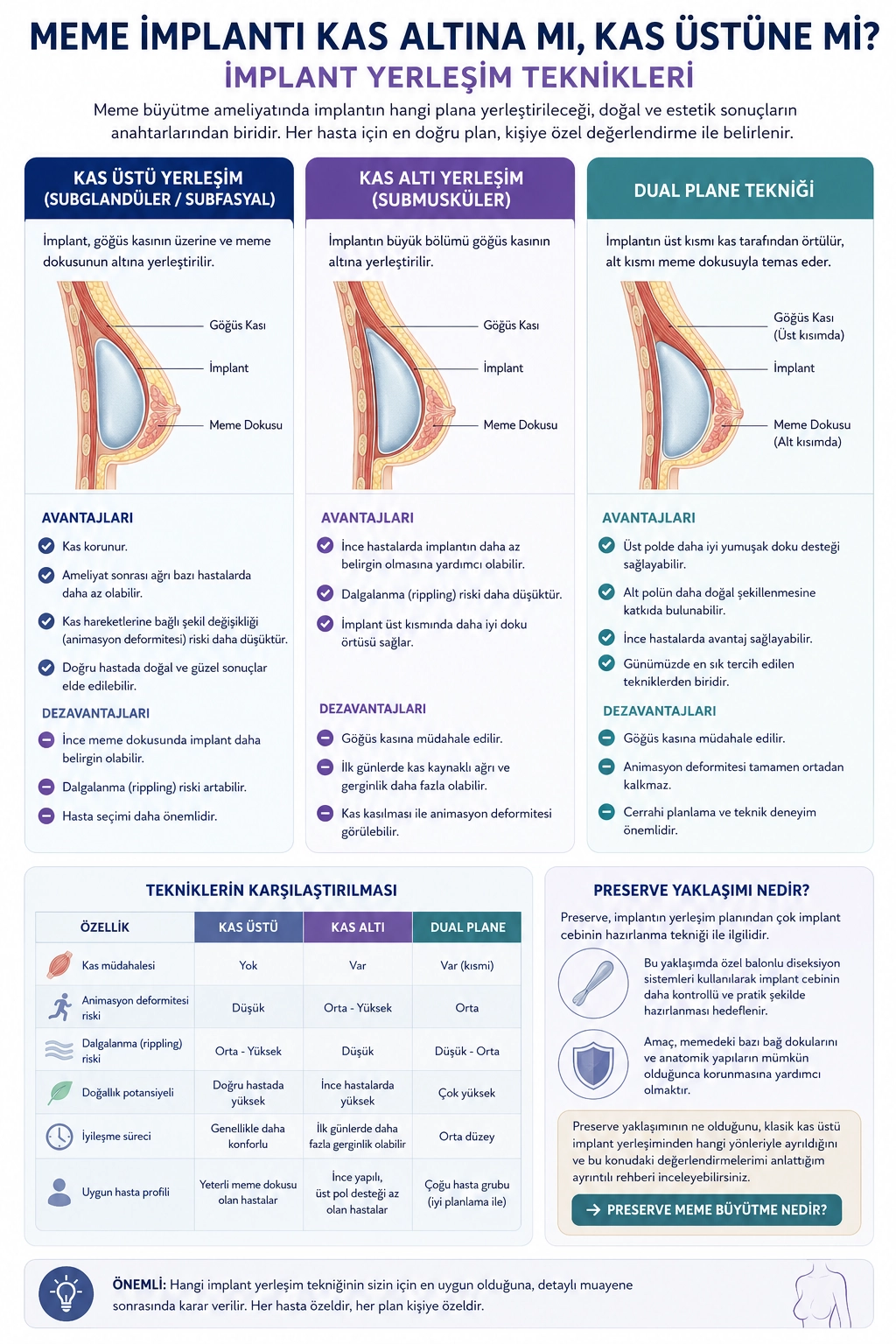
In modern breast augmentation surgery, implants can essentially be inserted using three different placement techniques.
Subglandular / Subfascial Placement
In this method, the implant is placed over the chest muscle.
It is a reliable surgical technique that has been in use for many years and can produce natural-looking results in suitable patients.
Submuscular Placement
In this technique, the majority of the implant is positioned beneath the chest muscle.
In previous years, it was one of the techniques most frequently chosen, particularly for patients with thin breast tissue.
Dual-Plane Technique
Dual Plane is a modern implant placement technique designed to combine certain advantages of both submuscular and subglandular placement.
In this method, the upper part of the implant is covered by the muscle, whilst the lower part is in contact with the breast tissue.
It is currently one of the most commonly preferred implant placement methods amongst plastic surgeons.
So, what is Preserve?
‘Preserve’, a term frequently heard in recent years, is not in fact a new anatomical plane in which the implant is placed.
In the ‘Preserve’ approach, too, the implant is placed over the muscle in suitable patients.
For this reason, it would be incorrect to regard Preserve as a completely new implant placement method that differs from the over-muscle technique.
The main difference lies in the way the implant pocket is prepared.
Whilst in conventional surgery this pocket is created using standard surgical dissection techniques, the Preserve approach utilises a range of specially developed auxiliary instruments at this stage.
These instruments can assist the surgeon at specific stages of the operation and are designed to preserve certain anatomical structures.
How Do I Assess the ‘Preserve’ Approach?
In my view, when assessing the Preserve approach, it is necessary to distinguish between the implant placement plan and the surgical instruments used.
This is because submuscular breast implant placement is a well-established surgical technique that has been in use for many years. Even before the ‘Preserve’ concept emerged, I was performing submuscular implant placement under local anaesthesia in suitable patients.
For this reason, I believe that Preserve’s most significant contribution is not the placement of the implant over the muscle, but rather certain specialised surgical instruments designed to facilitate this procedure.
This equipment has its practical and useful aspects. However, in my view, the key factors determining the success of a breast augmentation operation are, rather than the system used, the correct patient selection, appropriate surgical planning and the surgeon’s experience.
You may also wish to take a look at the information page where I discuss the ‘Preserve’ approach in more detail.
What is a Supramuscular Breast Implant?
With an above-the-muscle placement, the breast implant is positioned on top of the pectoral muscle and beneath the breast tissue. Medically speaking, this term refers to placement techniques in which the implant is not covered by the muscle.
In the past, concerns have been raised regarding submuscular implants due to issues such as capsular contracture, the implant being noticeably palpable, or rippling. However, thanks to advances in implant technology, more accurate patient selection and improvements in surgical techniques, submuscular placement can now produce successful and natural-looking results in suitable patients.
For this reason, it is not correct to assess submuscular placement based on outdated information. When the right patient is selected, submuscular implant placement is one of the key options in modern breast augmentation surgery.
The Advantages of Subcutaneous Implantation
As with any surgical technique, there are certain advantages to submuscular implant placement.
Muscle is preserved.
As the pectoral muscle is not altered, its natural structure is preserved. This can be particularly advantageous for athletes who rely heavily on their pectoral muscles.
No change in shape is observed following the operation as a result of muscle movement.
In submuscular placements, some patients may experience animation deformity caused by the implant moving when the muscle contracts. This risk is significantly lower with supramuscular placement.
The recovery process may be more comfortable for some patients.
As the muscle tissue is not disturbed, the muscle-related pain and stiffness felt, particularly in the first few days, may be less severe. However, post-operative comfort can vary from person to person.
In the right patient, very natural-looking results can be achieved.
In patients with sufficient breast tissue and good skin quality, submuscular implants can look and feel extremely natural.
Disadvantages of Subcutaneous Implantation
Supramuscular implant placement is not suitable for every patient.
For certain anatomical features, different techniques may yield more successful results.
The implant may be more noticeable in thin breast tissue.
If the breast and skin tissue is not thick enough, the edges of the implant may be more noticeable to the touch or visible.
The risk of rippling may increase.
Particularly in slender patients, the ridges on the surface of the implant may occasionally be visible through the skin.
Patient selection is more important.
The most important factor in achieving successful outcomes with supra-muscular implant placement is the correct selection of patients. For this reason, it is not a method that can be applied as standard to every patient.
In which patients do I prefer the supramuscular placement?
I do not regard supramuscular implant placement as merely placing the implant on top of the muscle. What matters to me is whether this technique is truly compatible with the patient’s anatomy.
In patients who have sufficient breast tissue, good skin quality, and where I believe the implant can be covered naturally, submuscular placement may be a successful option.
Conversely, in patients with thin breast tissue, insufficient upper pole coverage, or those requiring additional support for the implant, different implant placement techniques may be more appropriate.
For this reason, I regard supra-muscular and infra-muscular placement not as pre-determined standard methods, but as surgical options that must be assessed on a case-by-case basis for each patient.
What is the Dual Plane Technique?
Dual Plane is a modern implant placement technique designed to capitalise on certain advantages of both submuscular and subglandular placement of breast implants.
In this technique, the upper part of the implant is covered by the pectoral muscle, whilst the lower part comes into contact with the breast tissue. This allows the upper part of the implant to benefit from muscular support, whilst the aim is to achieve a more natural shape for the breast in the lower part.
For this reason, the Dual Plane technique is not, in the traditional sense, a purely submuscular or purely supramuscular placement. It is a distinct surgical technique that combines specific features of both approaches.
Why Was the Dual-Plane Technique Developed?
Breast augmentation surgery has undergone significant changes over the years.
Whilst in the past implants were mostly placed either entirely beneath the muscle or entirely above the muscle, over time various techniques have been developed with the aim of utilising the strengths of both methods.
The Dual Plane approach also emerged as a result of this line of thinking.
The aim is;
- to provide better tissue coverage over the upper part of the implant,
- to help the lower lip take on a more natural shape,
- is to improve the aesthetic outcome in selected patients.
Of course, these benefits do not apply to the same extent for every patient. Like all other techniques, the Dual Plane method yields successful results when the right patient is selected.
The Advantages of the Dual-Plane Technique
In suitable patients, the Dual Plane technique offers a number of significant advantages.
It may provide better soft-tissue support in the upper pole.
The upper part of the implant being covered by muscle can help the implant blend in more naturally, particularly in patients with thinner breast tissue.
It may help the lower lip to take on a more natural shape.
Contact between the lower part of the implant and the breast tissue can help create a more natural contour in the lower part of the breast.
It may offer benefits for patients who are underweight.
In patients whose breast tissue is not particularly thick, having the upper part of the implant supported by the muscle may offer certain aesthetic advantages.
It is one of the most commonly used implant placement techniques today.
Thanks to technical advances and many years of surgical experience, the Dual Plane technique has become one of the implant placement methods favoured by many plastic surgeons today.
Disadvantages of the Dual-Plane Technique
The Dual Plane technique is not the ideal method for every patient either.
In some cases, different implant placement plans may be more suitable.
The pectoral muscle is operated on.
As the muscle needs to be gradually released, you may experience muscle-related pain and tightness during the early stages of the operation.
The animation distortion does not disappear completely.
As the upper part of the implant is attached to the muscle, some patients who use their chest muscles very intensely may experience movement of the implant during muscle contraction. However, this does not occur in every patient, and the severity may vary from person to person.
Surgical planning is important.
For the Dual Plane technique to be successful, the choice of implant, the extent to which the muscle is released and the patient’s anatomy must all be assessed together. For this reason, it is not a standard procedure, but a technique that requires a personalised plan.
Why Do I Often Opt for the Dual-Plane Technique?
In my own practice, I assess the implant placement plan individually for each patient, taking their anatomy into account.
That said, one of the methods I most frequently opt for in suitable patients is the Dual Plane technique.
The reason for this is that, in many patients, this technique provides a more natural transition at the upper part of the implant and can help to shape the breast in a balanced way.
However, this does not necessarily mean that the Dual Plane technique will be used for every patient.
In patients with sufficient breast tissue and suitable anatomical characteristics, submuscular placement may also be a successful option. For me, what matters is not adapting the technique to the patient, but selecting the technique that is most suitable for the patient.
My patients sometimes ask me, “Is submuscular better, or supramuscular?” I, however, approach this question differently: first of all, I assess your anatomy. Because, in my view, what matters is not whether the implant is placed submuscularly or supramuscularly, but determining the most appropriate implant placement plan for you.
Under the Muscle or Over the Muscle? Which Technique Looks More Natural?
One of the questions patients most frequently ask is which implant placement technique produces the most natural-looking results.
In fact, whether the implant is placed under or over the muscle is not the only factor determining a natural appearance. There are many factors that influence the natural result. Among these, the patient’s breast and chest structure, skin quality, the volume and profile of the implant, and surgical planning are the most important determinants.
It is therefore not correct to make a definitive judgement such as ‘subcutaneous implants always look more natural’ or ‘supramuscular implants always look artificial’.
When the right patient is selected, highly natural results can be achieved with both the submuscular and Dual Plane techniques.
Is There a Difference in Terms of Pain?
One of the issues that patients worry about most before an operation is post-operative pain.
With techniques that involve intervention in the muscle tissue, muscle-related tension and pain may be slightly more pronounced, particularly during the first few days. With a submuscular placement, however, the pectoral muscle is preserved. Consequently, some patients may experience a more comfortable recovery process in the early stages.
However, thanks to the modern pain management methods used today, regardless of the technique employed, the vast majority of patients find the post-operative period more comfortable than they had anticipated.
Which Technique Is More Suitable for People Who Exercise?
When planning implant placement for patients who exercise regularly or who use their chest muscles intensively, their lifestyle should also be taken into account.
In particular, the active use of the chest muscles by people involved in fitness, CrossFit, swimming, climbing or professional sports may affect the implant placement plan.
In these patients, submuscular placement may offer certain advantages. However, it is not possible to say that there is a single correct method for every athlete. The most suitable plan should be devised by taking into account the patient’s breast tissue, chest structure and aesthetic expectations.
Conclusion
Whether a breast implant should be placed beneath or above the muscle is one of the most important decisions in breast augmentation surgery. However, this decision should not be based on general information found online, but rather on a detailed examination and a personalised surgical plan.
Each of the supra-muscular, infra-muscular and Dual Plane techniques has its own specific advantages and certain limitations. It is not correct to regard any one of these methods as the best option for all patients today.
In my own practice, I assess each patient individually; by analysing their breast anatomy, skin characteristics, lifestyle and aesthetic expectations together, I devise the most suitable implant placement plan.
Because, in my view, the key to a successful breast augmentation operation lies not in applying a single technique to everyone, but in choosing the right technique for the right patient.
📘 Related Guide
What is Breast Augmentation with Tissue Preservation?
The ‘Preserve’ approach, which has been frequently discussed in recent years, actually relates more to the technique used to prepare the implant site than to the implant placement plan.
You can read the guide in which I explain in detail how this differs from conventional supra-muscular implant placement, which patients it may be suitable for, and my perspective on this approach.
→ What is Breast Augmentation with Tissue Preservation?
Frequently Asked Questions
Should breast implants be placed under the muscle or over the muscle?
There is no single correct answer to this. The placement of the implant is determined by taking into account the thickness of the breast tissue, the structure of the ribcage, skin quality, lifestyle and aesthetic expectations. The aim is to select the implant placement plan that will provide the most natural and safe result for each patient.
Do submuscular implants look more natural?
Not always. The placement of the implant—whether submuscular or supramuscular—is not the only factor determining a natural appearance. The patient’s anatomy, the characteristics of the implant and the surgical planning are just as important as the implant’s placement.
Do submuscular implants look artificial?
No. In suitable patients, submuscular implant placement can also produce extremely natural-looking results. Successful aesthetic outcomes can be achieved, particularly in patients with sufficient breast tissue and good skin quality.
Is the Dual Plane technique submuscular or supramuscular?
The dual-plane technique is neither a fully submuscular nor a fully subglandular placement. Whilst the upper part of the implant is covered by the pectoral muscle, the lower part comes into contact with the breast tissue. It is therefore regarded as a distinct implant placement technique that combines the specific advantages of both approaches.
Is Preserve a new implant placement technique?
No. In the Preserve approach, too, the implant is placed over the muscle in suitable patients. The key difference with Preserve lies in the specialised instruments used in the preparation of the implant pocket. For this reason, Preserve can be regarded not so much as a new anatomical implant placement plan, but rather as a different surgical approach to supracutaneous implant placement.
Are submuscular implants more painful?
With techniques that involve intervention on muscle tissue, muscle-related pain and stiffness may be slightly more pronounced in the first few days. However, thanks to modern pain management methods, the vast majority of patients find the post-operative period more comfortable than they had anticipated.
Which implant placement is preferred for people who exercise?
This decision depends on the type of sport the individual practises and their anatomical characteristics. In particular, when planning implant placement for athletes who make intensive use of their chest muscles, their lifestyle is also taken into account. It is not possible to say that a single method is the best option for all athletes.
Does the implant move during muscle movements?
In cases where implants are placed in relation to muscle, some patients may experience animation deformity caused by the implant moving when the muscle contracts. This does not occur in every patient, and its severity may vary from person to person.
How is the most suitable implant placement determined for me?
During the consultation, your breasts and chest structure will be assessed in detail. The thickness of the breast tissue, skin elasticity, the structure of your ribcage, your lifestyle and your aesthetic expectations will all be analysed together to create the implant placement plan best suited to you.
Is it possible to breastfeed with a submuscular implant?
Whether the implant is placed under or over the muscle does not, in itself, determine a woman’s ability to breastfeed. The surgical technique used and the preservation of breast tissue have a greater impact on breastfeeding. Many women can continue to breastfeed following breast augmentation surgery, provided they are suitable candidates.
Under the muscle or over the muscle? Which do you prefer more often?
I do not use the same method for every patient. Following the anatomical assessment I carry out during the consultation, I determine the implant placement plan best suited to the patient’s breast and chest anatomy. In suitable patients, one of the methods I most frequently prefer is the Dual Plane technique. However, in selected patients with sufficient breast tissue, submuscular implant placement can also be a successful option.
Why do I see conflicting information online about ‘under the muscle’ and ‘over the muscle’?
This is because implant placement techniques have evolved over the years and surgical approaches have changed. Furthermore, each plastic surgeon’s experience and preferred technique may differ. It is therefore normal to come across a variety of different recommendations online. What matters is that an implant placement plan suited to your anatomical structure is determined on an individual basis during your consultation.
Breast augmentation surgery prices may vary depending on the type of implant used, the surgical technique and the patient’s individual needs. Pricing in Istanbul is generally determined by the quality of the materials used and the surgeon’s level of experience.
Stay up to date with the latest news
- Do Breast Implants Rotate? (Implant Rotation)

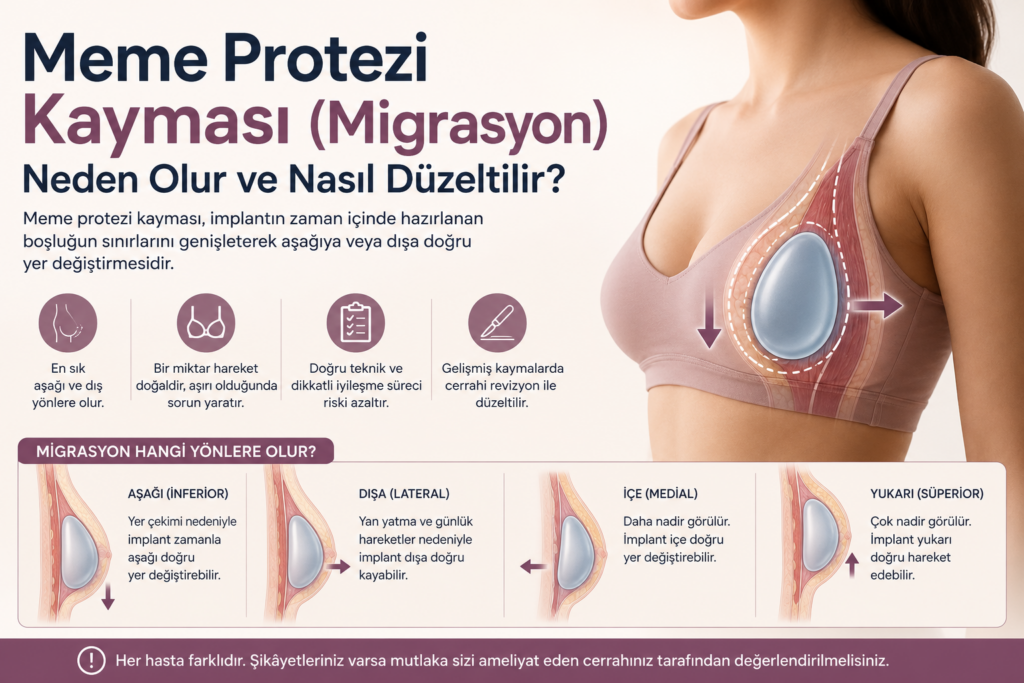
- Breast Implant Displacement (Migration): What Causes It and How Can It Be Corrected?
- Sexual Life After Breast Augmentation: When Is It Safe?

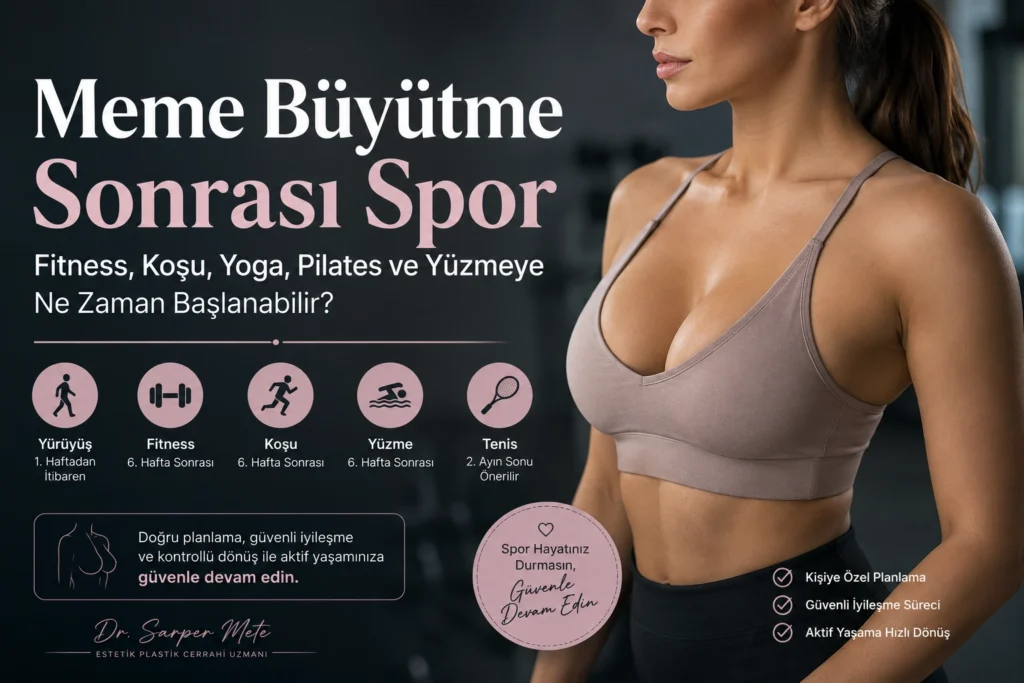
- Exercise After Breast Augmentation: When Can You Start Fitness, Running, Yoga, Pilates and Swimming?
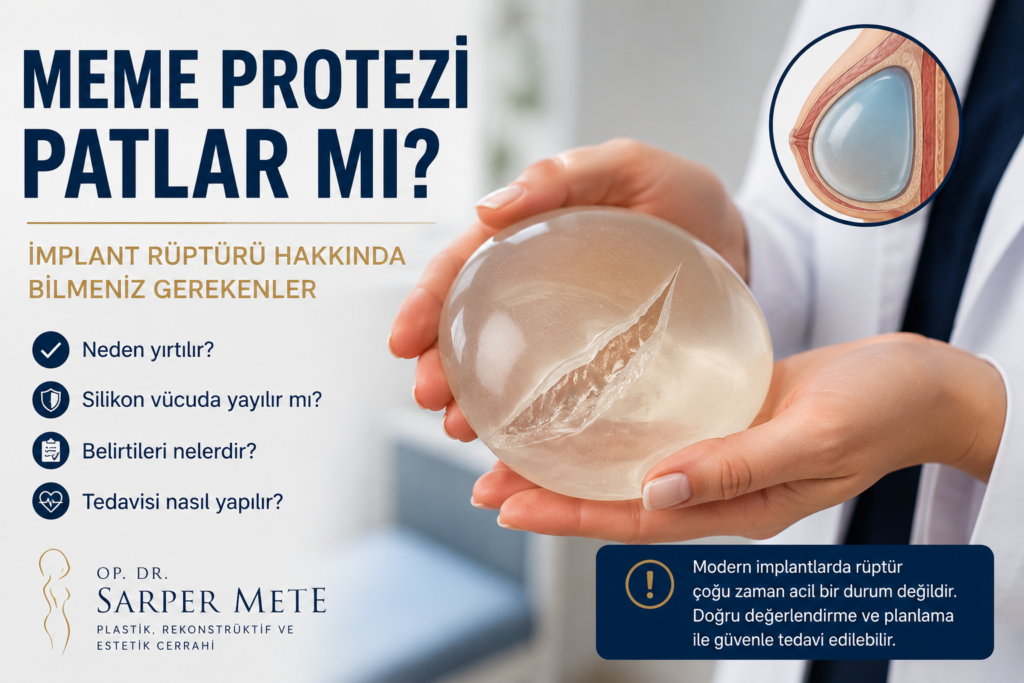
- Can Breast Implants Burst? What You Need to Know About Implant Rupture
- What is a Fibroadenoma?